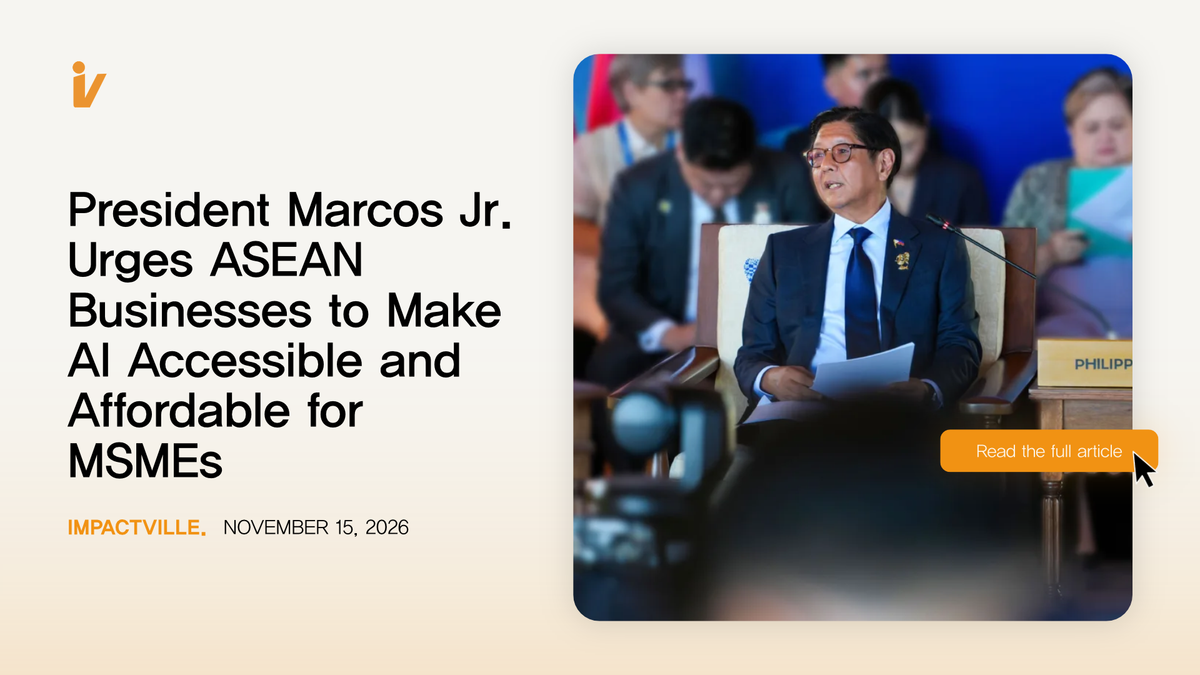
As the Philippines advances its regional AI agenda, President Ferdinand Marcos Jr. calls on technology companies and investors to ensure small businesses can benefit from artificial intelligence.
Making AI Accessible to Small Businesses
President Ferdinand Marcos Jr. has urged technology companies and investors across Southeast Asia to make artificial intelligence more affordable and accessible, particularly for micro, small, and medium enterprises (MSMEs).
In a video message delivered at the ASEAN Business and Investment Summit on November 15, Marcos emphasized that AI can contribute to economic growth and public welfare only if businesses of different sizes can access its benefits.
He called on technology companies to offer affordable tools and encouraged investors and financial institutions to support enterprises with growth potential, including businesses still seeking their first opportunity.
For MSMEs, AI could help reduce the time spent on repetitive tasks, make better use of limited resources, and reach more customers. These capabilities could allow smaller businesses to improve operations without requiring the same resources as larger companies.
AI's Potential Beyond Business
Marcos also highlighted AI's potential in sectors such as healthcare, where the technology could support research, innovation, and improved access to health services.
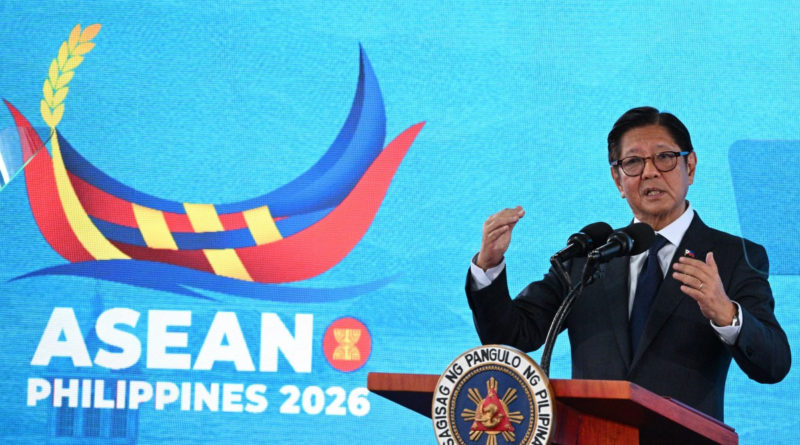
As the Philippines holds the 2026 ASEAN Chairship, the President said the country has placed AI and its role in regional development among the bloc's priorities.
The broader agenda also includes strengthening food supply chains through the ASEAN Food Security Alliance, ensuring reliable energy, improving infrastructure, and deepening regional integration.
However, Marcos stressed that expanding AI adoption must go hand in hand with public trust, responsible use, and investment in people.
He emphasized the need for cooperation among governments, businesses, researchers, and everyday technology users to ensure innovation serves the public good.
Philippines Establishes a National AI Governance Framework
The call for wider AI access comes as the Philippines moves to establish a national framework for responsible AI development and deployment.
On November 12, Marcos signed Executive Order No. 131, adopting the AI Governance Framework and creating the National Artificial Intelligence Council (NAIC).
The framework will serve as the country's strategic guide for AI development and use. Its key areas include ethical principles, technical standards, testing and evaluation, risk-based policies, and stronger institutional capabilities for research and development.
The National Artificial Intelligence Council will oversee the framework's implementation. It will be chaired by the Executive Secretary, with the secretary of the Department of Economy, Planning, and Development serving as vice chair.
Its membership includes representatives from key government agencies, including the Department of Information and Communications Technology (DICT), Department of Science and Technology (DOST), Department of Trade and Industry (DTI), Department of Finance, Department of Education, Department of Labor and Employment, and Department of Budget and Management.
The Commission on Higher Education and Technical Education and Skills Development Authority are also represented in the council.
Balancing Innovation With Accountability
Under EO 131, the council must report implementation progress to the President within 30 days after the end of each quarter. It is also required to review the framework at least every two years or earlier when significant technological, regulatory, or market developments warrant changes.
Meanwhile, the DICT is tasked with establishing and maintaining a digital monitoring and reporting platform to track implementation.
These measures aim to ensure that AI adoption is supported by clear standards, institutional coordination, and mechanisms for accountability.
Building an AI-Ready and Inclusive Economy
The push for accessible AI presents an opportunity for Philippine MSMEs to become more productive and competitive as digital tools continue to evolve.
But affordability is only one part of the challenge. Businesses also need digital infrastructure, relevant skills, reliable connectivity, and guidance on using AI responsibly.
With the establishment of its national AI governance framework and its participation in ASEAN's regional development agenda, the Philippines is positioning responsible AI adoption as both an economic and public-interest priority.
Ultimately, the goal is not simply to expand the use of artificial intelligence, but to make sure its benefits reach businesses, workers, and communities across the country.