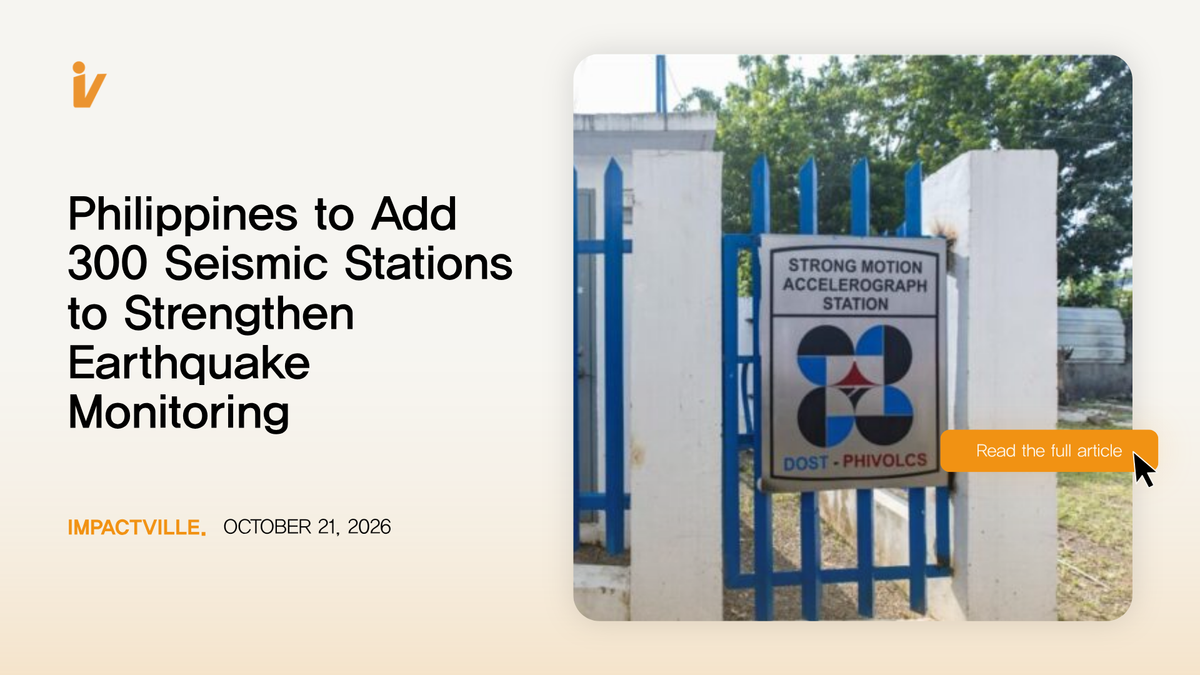
DOST plans to expand the country's seismic monitoring network beginning in 2027, providing more data to support earthquake analysis, structural engineering, and disaster preparedness.
The Philippines is set to expand its earthquake monitoring capabilities, with the Department of Science and Technology (DOST) planning to install 300 additional seismic stations nationwide over the next five years.
In a report published by Newsbytes.PH on October 21, the agency said the expansion will begin in 2027 under the modernization program of the Philippine Institute of Volcanology and Seismology (PHIVOLCS). The planned installations would expand a nationwide network that currently has 130 stations.
The initiative aims to strengthen the country's ability to collect earthquake data and support scientific research, infrastructure planning, and disaster risk reduction.
Turning Earthquake Data Into Practical Solutions
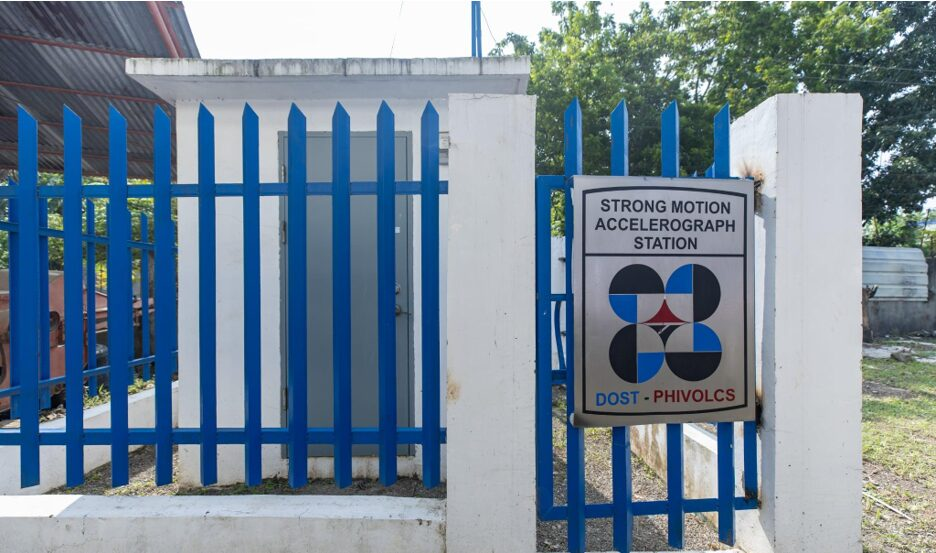
One facility highlighted during the recent Regional Science, Technology, and Innovation Week in Davao Region was a strong-motion monitoring station at Davao del Sur State College in Digos City.
Unlike conventional seismic stations that help locate earthquake epicenters, strong-motion sensors measure the intensity of ground movement during an earthquake. These measurements can help engineers understand the forces structures may experience during seismic events.
DOST Secretary Renato Solidum Jr. explained that the sensors record earthquake waveforms, generating data that can inform structural design. PHIVOLCS Director Teresito Bacolcol also noted that this information helps engineers determine ground acceleration that buildings must be designed to withstand.
The data can therefore contribute to safer infrastructure by helping engineers account for local earthquake conditions rather than relying solely on generalized assumptions.
Partnerships Support Local Monitoring
The Digos monitoring station demonstrates how government agencies and educational institutions can work together to strengthen science infrastructure.
DOST-PHIVOLCS provided the monitoring equipment and technical support, while Davao del Sur State College supplied the site, electricity, and a project monitoring team.
The station is intended not only to improve earthquake monitoring but also to generate data for research, education, and regional disaster risk reduction.
DOST also works with local government units, academic institutions, and other partners to establish monitoring facilities in suitable locations, depending on the purpose and technical requirements of each installation.
Why More Seismic Stations Matter
Expanding the monitoring network could provide researchers and engineers with more localized information about earthquake activity and ground movement across the country.
Such data can support infrastructure planning, help improve understanding of regional seismic conditions, and contribute to systems used for rapid detection of strong earthquakes and tsunami monitoring.
For a country exposed to frequent earthquakes because of its location along the Pacific Ring of Fire, strengthening scientific monitoring is an important part of disaster preparedness.
However, monitoring stations do not prevent earthquakes or eliminate risk. Their value depends on reliable equipment, effective data analysis, coordination among agencies, and the use of scientific findings in building standards and emergency planning.
Building a Stronger Science-Based Disaster Response
The planned expansion highlights the role of science and technology in protecting communities and supporting more resilient infrastructure.
As the Philippines develops its monitoring network, collaboration among researchers, government agencies, universities, and local communities will remain important to ensuring that collected data leads to practical improvements in preparedness and safety.
The next step will be implementing the planned installations and translating the resulting scientific information into decisions that help communities better understand and manage earthquake risks.