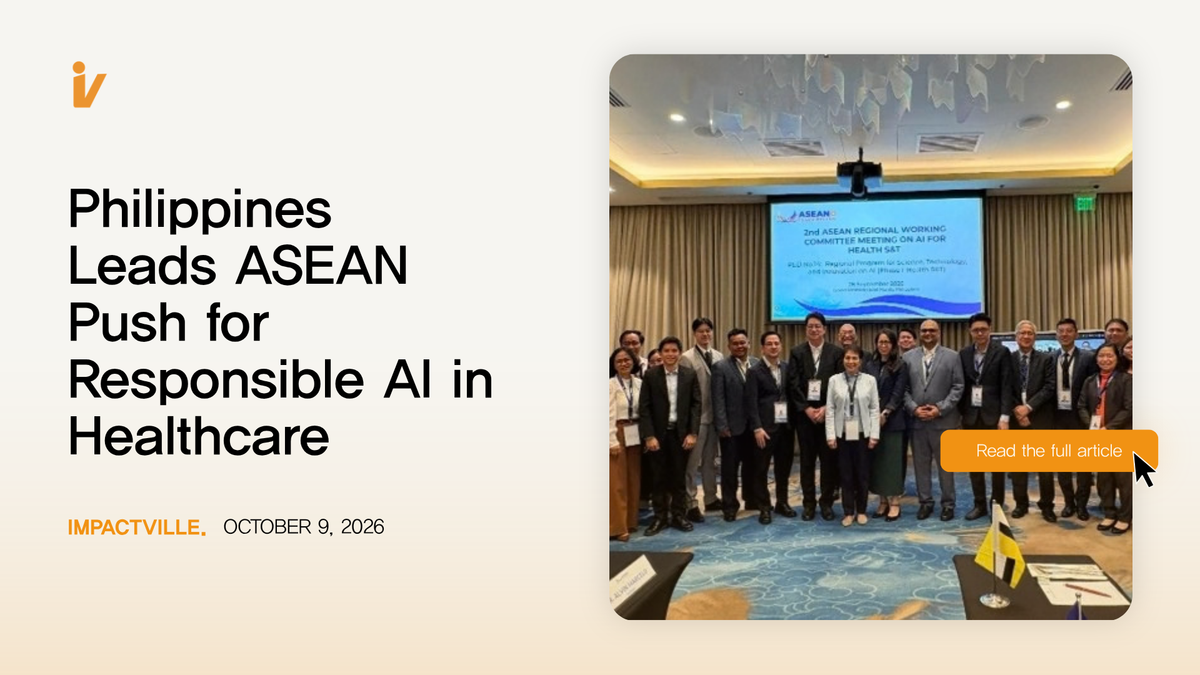
The Philippines is bringing ASEAN member states together to develop a regional framework for safe, ethical, and inclusive artificial intelligence in health research and development.
Artificial intelligence is increasingly shaping the future of healthcare, from supporting medical research to improving how health systems process information and develop new solutions. But as countries explore these possibilities, questions surrounding safety, ethics, governance, and accessibility are becoming just as important as the technology itself.
The Philippines is taking part in addressing these challenges by leading a regional initiative to guide the responsible adoption of AI in healthcare across Southeast Asia.
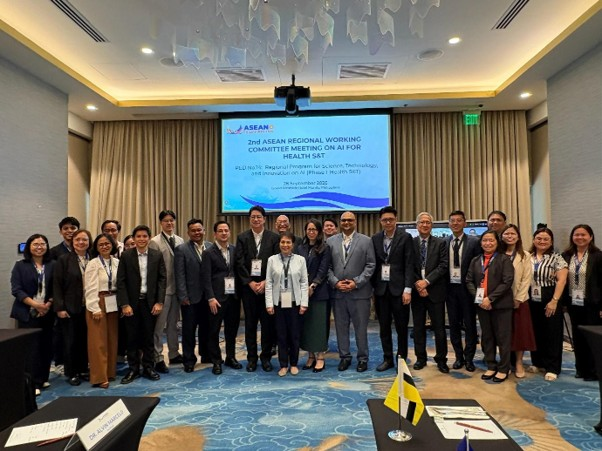
Through the Department of Science and Technology (DOST) and its attached agency, the Philippine Council for Health Research and Development (PCHRD), the country hosted the second regional meeting of the ASEAN Working Committee on Artificial Intelligence for Health Science and Technology on September 28–29, 2026. The hybrid gathering took place at the Grand Westside Hotel in Manila and the De La Salle University–Laguna Campus.
The meeting forms part of the Philippines' 2026 ASEAN Chairship priorities, with a focus on strengthening regional cooperation in science, technology, and innovation.
Building a Regional Framework for AI in Health
The initiative aims to establish a coordinated approach to AI adoption in healthcare, ensuring that technological development is supported by appropriate governance, research capabilities, and ethical safeguards.
According to DOST, the regional meetings produced several key outcomes, including a validated assessment of AI readiness in health science and technology across ASEAN member states, a draft regional action plan, and policy recommendations for regional consideration.
The proposed action plan outlines shared priorities for AI research and development, governance, and capacity-building. The policy recommendations are scheduled for endorsement by the ASEAN Committee on Science, Technology, and Innovation in the fourth quarter of 2026.
These efforts align with the ASEAN Responsible AI Roadmap 2025–2030 and the ASEAN Plan of Action on Science, Technology, and Innovation 2026–2035.
Rather than allowing AI development to progress independently across national borders, the initiative seeks to encourage greater coordination among countries working toward similar healthcare and research objectives.
Collaboration Across Southeast Asia
Representatives from all 11 ASEAN member states participated in the regional discussions, alongside officials from the Senior Officials' Meeting on Health Development, the ASEAN Working Group on AI Governance, and the ASEAN Secretariat.
The initiative also receives funding support from the Economic Research Institute for ASEAN and East Asia, with technical expertise provided by the Foundation for the Advancement of Clinical Epidemiology, Inc.
The involvement of these organizations highlights the importance of bringing together scientific institutions, policymakers, and regional partners to address the opportunities and risks associated with AI in healthcare.
For countries with different levels of technological readiness, cooperation can help identify shared priorities and strengthen the capacity needed to develop and implement AI-driven health solutions responsibly.
Beyond Technology: Making AI Safe and Inclusive
The expansion of AI in healthcare presents opportunities to support medical research, improve health-related processes, and strengthen scientific collaboration. However, these benefits depend on how the technology is developed, governed, and implemented.
A regional framework can help establish common priorities for responsible AI adoption while encouraging countries to strengthen their research capabilities and governance systems.
For the Philippines, the initiative also demonstrates how science and technology policy can contribute to broader regional development. As ASEAN Chair for 2026, the country has an opportunity to help shape discussions on how emerging technologies can support public services and human well-being.
DOST Secretary Renato U. Solidum Jr. emphasized the Philippines' commitment to ensuring that AI is used ethically and inclusively to strengthen healthcare systems and build regional capacity.
The department also plans to use the healthcare initiative as a foundation for future regional AI cooperation in other sectors, including energy, industry, and agriculture.
Shaping the Future of AI in Healthcare
The Philippines' leadership in the regional discussions marks a step toward establishing a more coordinated approach to AI research and development across Southeast Asia.
The next phase will depend on how the draft action plan and policy recommendations progress, and how participating countries translate shared priorities into practical programs and stronger research capabilities.
As AI continues to evolve, the challenge for ASEAN will be to ensure that innovation advances alongside accountability, collaboration, and inclusive access.
The future of AI in healthcare will not depend on technology alone, but on how effectively countries work together to make its benefits safe, accessible, and meaningful for the communities they serve.