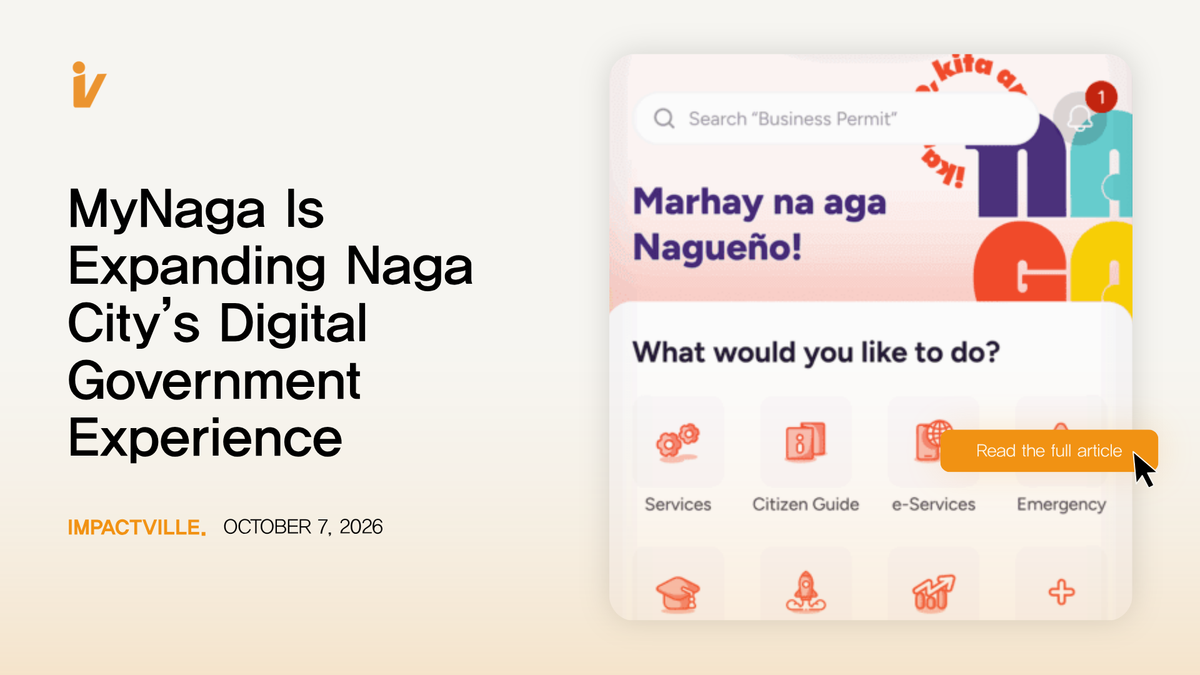
More than a year after its initial launch, MyNaga is moving beyond its role as a digital gateway to Naga City services.
Launched on August 18, 2025, the official city app was created to make government services, information, emergency contacts, and citizen reporting more accessible to Nagueños. But its development since launch shows that the platform is becoming a broader part of how the city delivers and manages digital public services.
From City Information to Citizen Action
In its early months, MyNaga already gave residents access to city services, official announcements, emergency hotlines, and a channel for reporting community concerns.
The reporting function quickly became one of its more visible uses. By October 2025, the city reported that residents had submitted 2,074 reports, with 1,213 already resolved. These included concerns ranging from broken streetlights and illegal parking to garbage collection, sidewalk obstructions, and defective traffic lights.
The reports are stored in a centralized database, allowing the city to monitor recurring concerns and prioritize issues that require government action.
That makes the app more than an information portal. It gives residents a direct digital channel for participating in local governance.
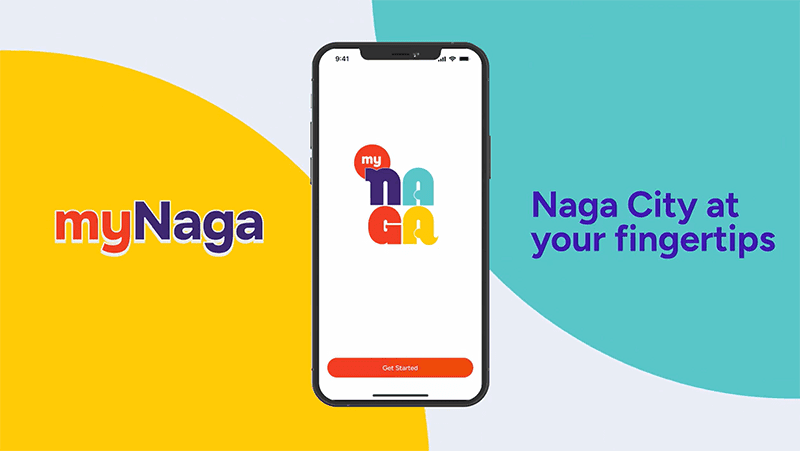
MyNaga Version 2 Brings More Into the Platform
The biggest development came in August 2026, when MyNaga Version 2 introduced additional services and features, including DisipliNaga, Transport Hub, Events, and MyNaga Shop.
The expansion reflects a shift in the app's role. Instead of simply putting existing city information online, MyNaga is gradually becoming a centralized digital platform for different aspects of everyday life in Naga.
Its current app listing also highlights access to local services, official news and updates, emergency hotlines, community reporting, and other city information.
Digital Reporting Is Becoming Part of City Governance
One of the more significant developments is the city's move to formally integrate MyNaga into digital traffic enforcement.
In May 2026, the Naga City Sangguniang Panlungsod enacted Ordinance No. 2026-062, establishing a digital reporting mechanism for violations of the city's Transport and Traffic Code. The ordinance specifically recognizes MyNaga as one of the platforms through which residents can submit reports using in-app photo capture and geotagging.
Under the system, submitted reports can be reviewed by the Traffic Management Center, while verified violations may proceed through the city's established enforcement process.
It is another example of how an app initially built around access to government information can evolve into infrastructure that supports actual government operations.
Building a More Digital Naga
MyNaga's expansion also fits into Naga City's broader digital transformation agenda.
In November 2025, the city created the Advanced Naga for Innovation and Good Governance (ANINAG) Council, a body tasked with coordinating digital transformation and innovation governance. The MyNaga App Team serves as the council's secretariat and provides technical, administrative, and documentation support.
The city's stated goal is to build an “Open, Digital, and Participatory Naga” as part of its 2028 agenda.
In that context, MyNaga is not simply a standalone mobile application. It is becoming one component of a larger digital government strategy.
What's Next for MyNaga?
The platform's development also points toward further expansion.
Earlier plans for the app included additional health-related services, including a citizen ID containing medical information and an e-reseta system, while the city also planned to publish government purchases through the platform to strengthen transparency.
Meanwhile, the app continues to receive updates. Its current release history shows ongoing additions and improvements, including new reporting controls, updated event information, and features introduced through Version 2.
More than a year after its launch, the story of MyNaga is therefore less about introducing a new government app and more about watching an existing digital platform evolve.
For Naga City, the next stage of digital governance may not be about creating more separate systems—but about making the platforms residents already use increasingly useful, connected, and responsive.
MyNaga's progress offers a look at what that transition can look like on the ground: from accessing information on a phone to actively participating in how a city responds to its communities.