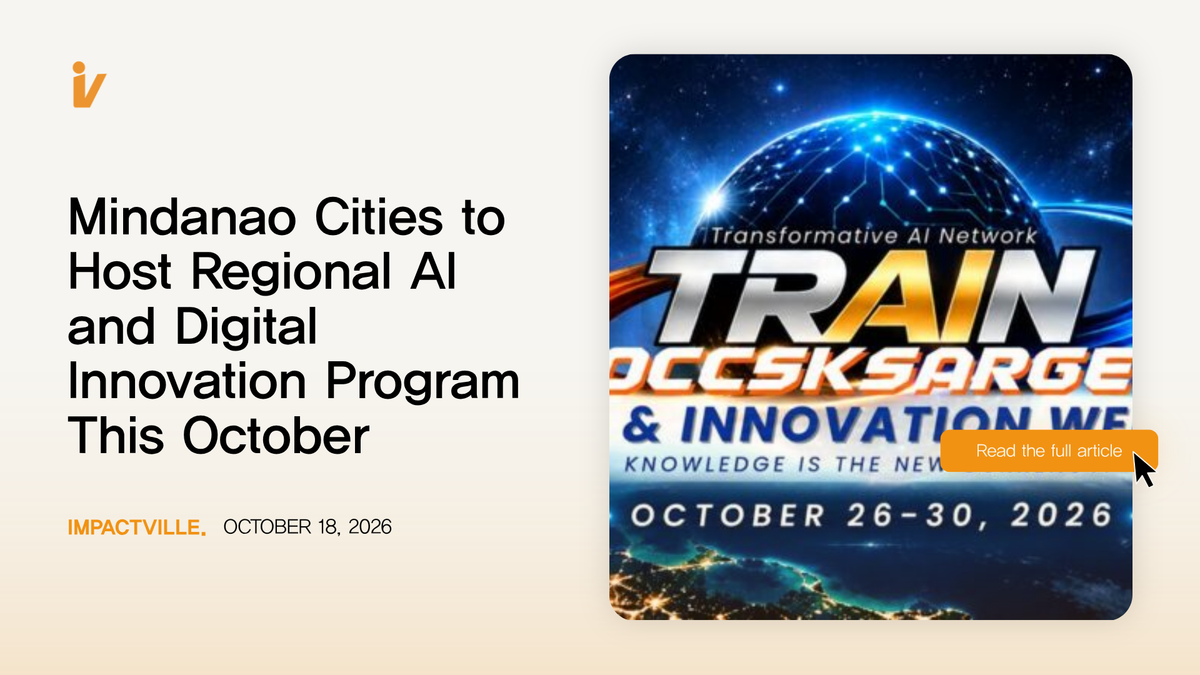
TRAIN 2026 will bring businesses, government agencies, educators, and technology stakeholders together across SOCCSKSARGEN to explore AI adoption, digital transformation, and regional entrepreneurship.
Mindanao is preparing to host a regional program focused on artificial intelligence, digital transformation, and technology-driven economic development, bringing innovation discussions closer to businesses, students, and local government institutions.
The Transformative AI Network (TRAIN) will conduct a five-day program across General Santos, Koronadal, and Kidapawan from October 26 to 30, 2026. The initiative aims to connect regional stakeholders and identify opportunities to apply emerging technologies to business operations, public services, education, and workforce development.
According to Newsbytes.PH, the program is being convened by the Philippine ICT Innovation Network (PIIN) and Digital Innovation for Women Advancement (DIWA), alongside CATALIST ICT Inc., Cotabato’s ICT Council, the General Santos Chamber, and other institutional partners.
Bringing AI Opportunities to Regional Communities
The program will explore how artificial intelligence can support businesses and public institutions beyond major technology centers such as Metro Manila.
Its opening day in General Santos City on October 26 will focus on enterprise AI applications, investment readiness, and talent development. Participants are also expected to discuss digital trust and the practical requirements for integrating AI into business operations.
On October 27, business representatives and students will work on venture concepts designed to address enterprise challenges. A DIWA-Mindanao women's forum will also examine mentoring, market opportunities, and business models that incorporate human oversight and digital safety.
These activities aim to connect technology knowledge with practical business needs, while creating opportunities for aspiring entrepreneurs to develop ideas around real-world challenges.
Digital Government, Cybersecurity, and Robotics
The program will move to Koronadal City on October 28, where discussions will cover data-driven local government, digital payments in public services, creative industries, cybersecurity, and robotics.
These topics reflect the growing role of technology in improving government operations and supporting more efficient public services. They also highlight the importance of cybersecurity and digital trust as more organizations adopt connected systems and online platforms.
In Kidapawan City on October 29, participants will focus on innovation ecosystem development, including workforce capacity, entrepreneurship, digital strategy, institutional collaboration, and resilience.
The final day on October 30 will bring together young people, educators, businesses, and public-sector representatives to discuss AI's implications for education, employment, creativity, and public service. Digital citizenship and responsible technology use will also be part of the program.
Strengthening the Regional Innovation Ecosystem
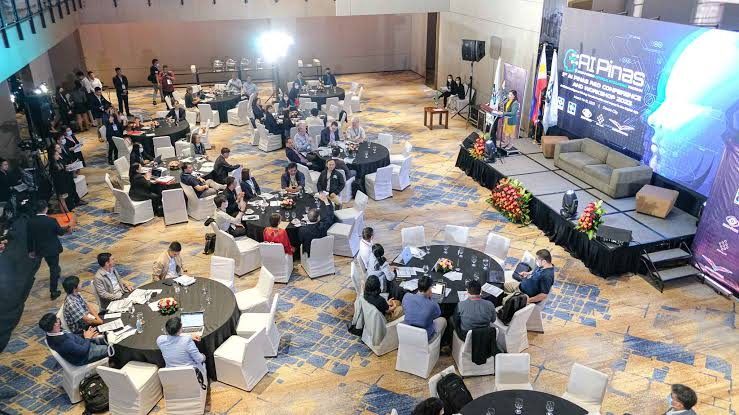
TRAIN follows previous editions held in Bacolod and Isabela. The 2026 SOCCSKSARGEN program builds on this regional approach by bringing together organizations that can help connect technology adoption with local economic priorities.
Scheduled contributors include representatives and practitioners from Globe Telecom, FullSuite Pod, Jaythree Information Technology, Ignite Telecoms, Wadhwani Foundation, the Multi-Media Arts Council of the Philippines, and Custard Innovations Corp., alongside specialists in education, training, and innovation.
By bringing these groups together, the initiative aims to encourage collaboration among businesses, educational institutions, government agencies, and technology organizations.
Such partnerships can help regional communities identify skills gaps, explore business opportunities, and develop practical strategies for adopting emerging technologies.
Turning AI Discussions Into Local Opportunities
Artificial intelligence is creating new possibilities for productivity, entrepreneurship, and public service, but access to knowledge, skilled workers, infrastructure, and responsible implementation remains important.
Regional programs like TRAIN can help address these needs by creating spaces for businesses and institutions to exchange ideas, develop partnerships, and explore technology solutions suited to their communities.
The longer-term impact will depend on whether the connections and ideas developed during the program lead to continued collaboration, stronger digital capabilities, and technology projects that respond to local needs.
For SOCCSKSARGEN, the initiative offers an opportunity to make AI and digital innovation part of a broader regional development conversation—one that includes businesses, students, educators, local governments, and the wider technology community.