President Ferdinand Marcos Jr. toured the Nuvali Steel Processing Center, Inc. (NSPCI) in Biñan City on Saturday and came away with a pledge: the government will widen its support for Filipino manufacturers adopting Industry 4.0 technologies, using the robotics-driven steel plant as proof of what that support can do.
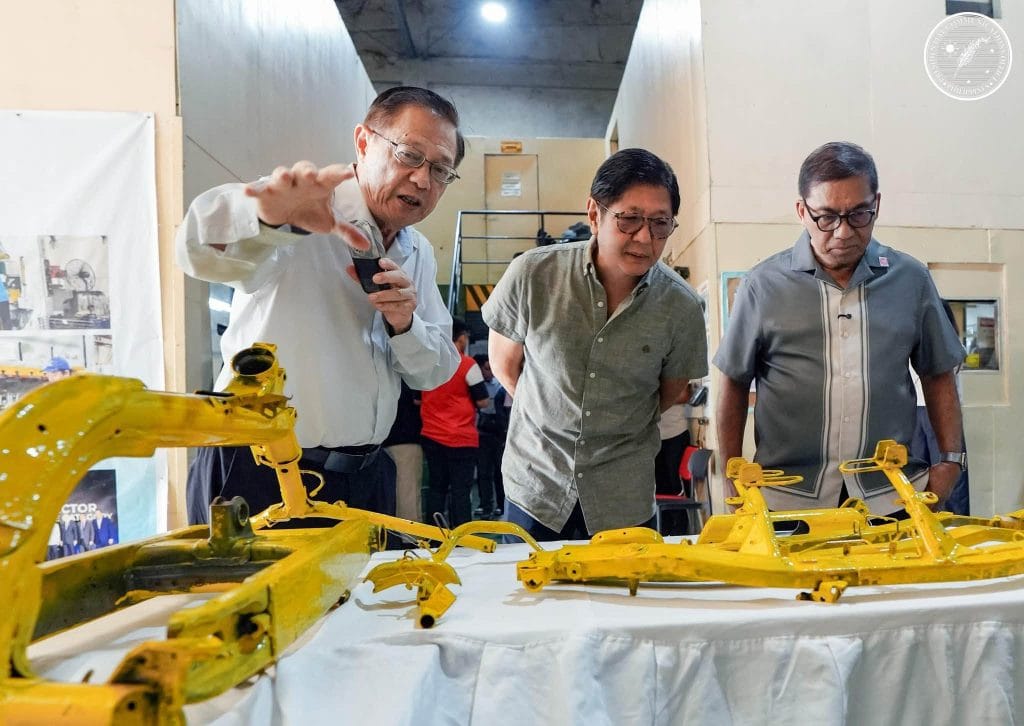
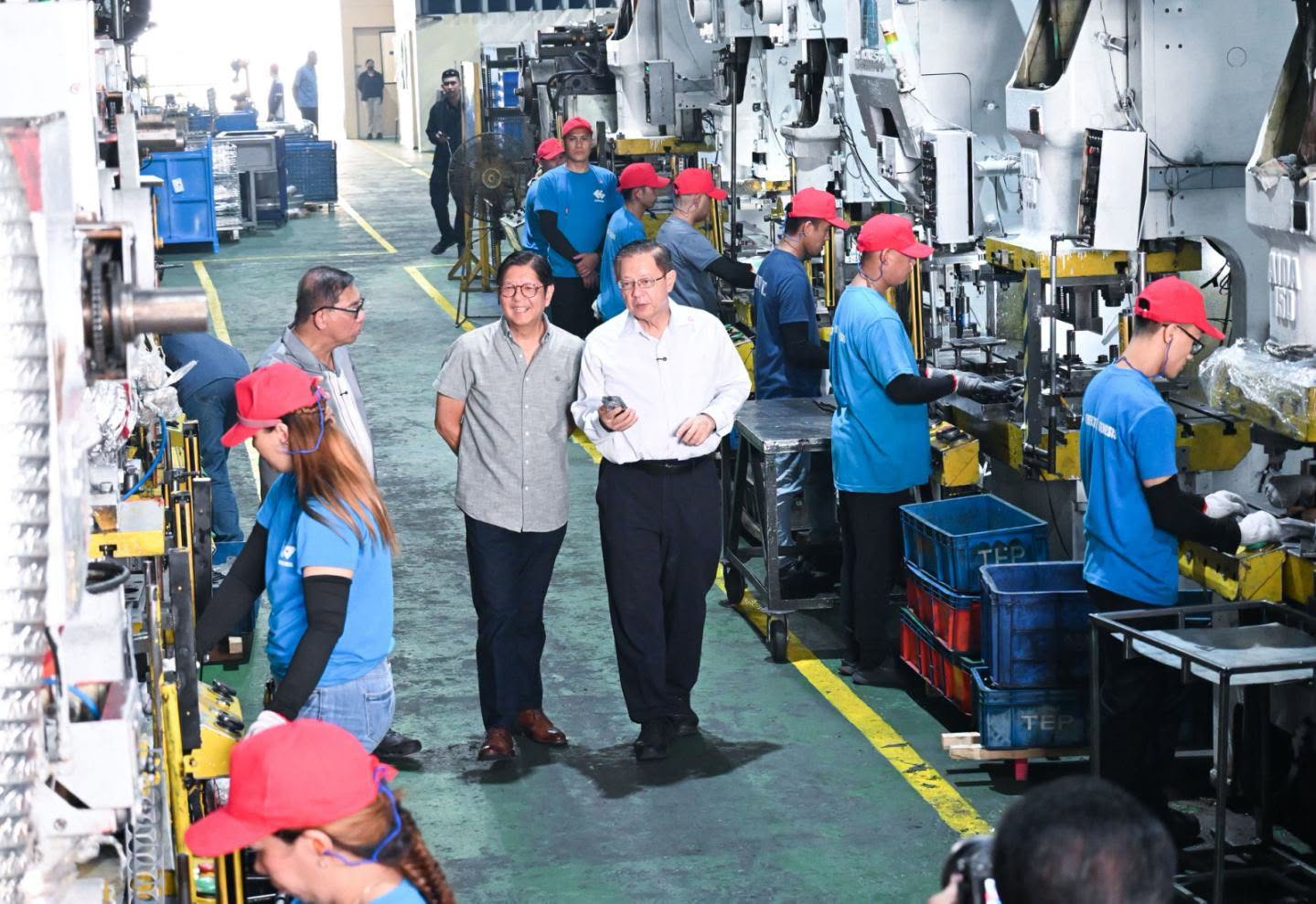
Marcos was accompanied by Department of Science and Technology (DOST) Secretary Renato Solidum Jr. and NSPCI president Jimmy Chan on a walkthrough of the facility, located at the Laguna Technopark Annex, where two advanced arc-welding robots and laser-cutting systems now handle work that once relied on manual labor.
"It is fascinating to see the state-of-the-art robotics actually in an industrial setting," Marcos said during the visit. "We will do more of this, not only for Nuvali Steel, but also for the other companies."
From a small welding shop to an automated supplier
Founded in 2013, NSPCI became a beneficiary of DOST's Small Enterprise Technology Upgrading Program (SETUP) in 2023, receiving around PHP3 million in government funding to help it adopt robotic welding. The upgrade let the company produce automobile, motorcycle, aircraft, and heavy-machinery components, along with jeepney parts, that meet international quality standards — output it says previously had to be sourced from abroad.
"We don't need to import various parts anymore," Marcos noted. "The value-added stays here in the Philippines."
The payoff DOST officials pointed to wasn't just output quality: NSPCI's workforce grew from 71 to 241 employees after robotics were incorporated into production, a figure Marcos and Solidum cited as evidence that automation, done right, expands jobs rather than eliminating them.
SETUP 4.0: the mechanism behind the pledge
The visit doubled as a showcase for SETUP 4.0, DOST's upgraded technical-assistance program aimed at helping micro, small, and medium enterprises (MSMEs) meet Industry 4.0 standards. The program offers an innovation-enabling fund of up to PHP5 million per qualifying company, disbursed on zero-interest terms payable over three to five years.
"The cooperation between the DOST and the private sector...has been something new," Marcos said, framing the partnership model — public funding paired with private-sector execution — as the template he wants replicated across more firms, not just in steel and metal fabrication but across manufacturing broadly.
Why it matters beyond one steel plant
For a manufacturing base that has long competed on labor cost rather than technological sophistication, NSPCI's trajectory — a 71-person shop turning into a 241-person robotics-assisted exporter within a few years of a modest government grant — is the kind of case study the Marcos administration is betting can be repeated at scale. It also lands at a moment when a wider cohort of Philippine tech companies, from industrial IoT analytics firms to AI-driven manufacturing platforms, are pitching automation and digitization to the same MSME base SETUP 4.0 targets. A more aggressive, better-funded version of the program would give that emerging industrial-tech segment a much larger addressable market at home, not just abroad.
Sources: ABS-CBN News, Philippine News Agency, Manila Times, Philstar