Every disaster begins with the same problem.
Nobody has the full picture.
Emergency responders receive fragmented reports. Leaders are flooded with conflicting information. Communities desperately seek updates. Resources are deployed with incomplete data. And amid the confusion, every second lost can mean lives at risk.
For decades, crisis management has relied on phone calls, chat groups, spreadsheets, and disconnected systems trying to solve highly complex emergencies.
A Filipino startup believes there is a better way.
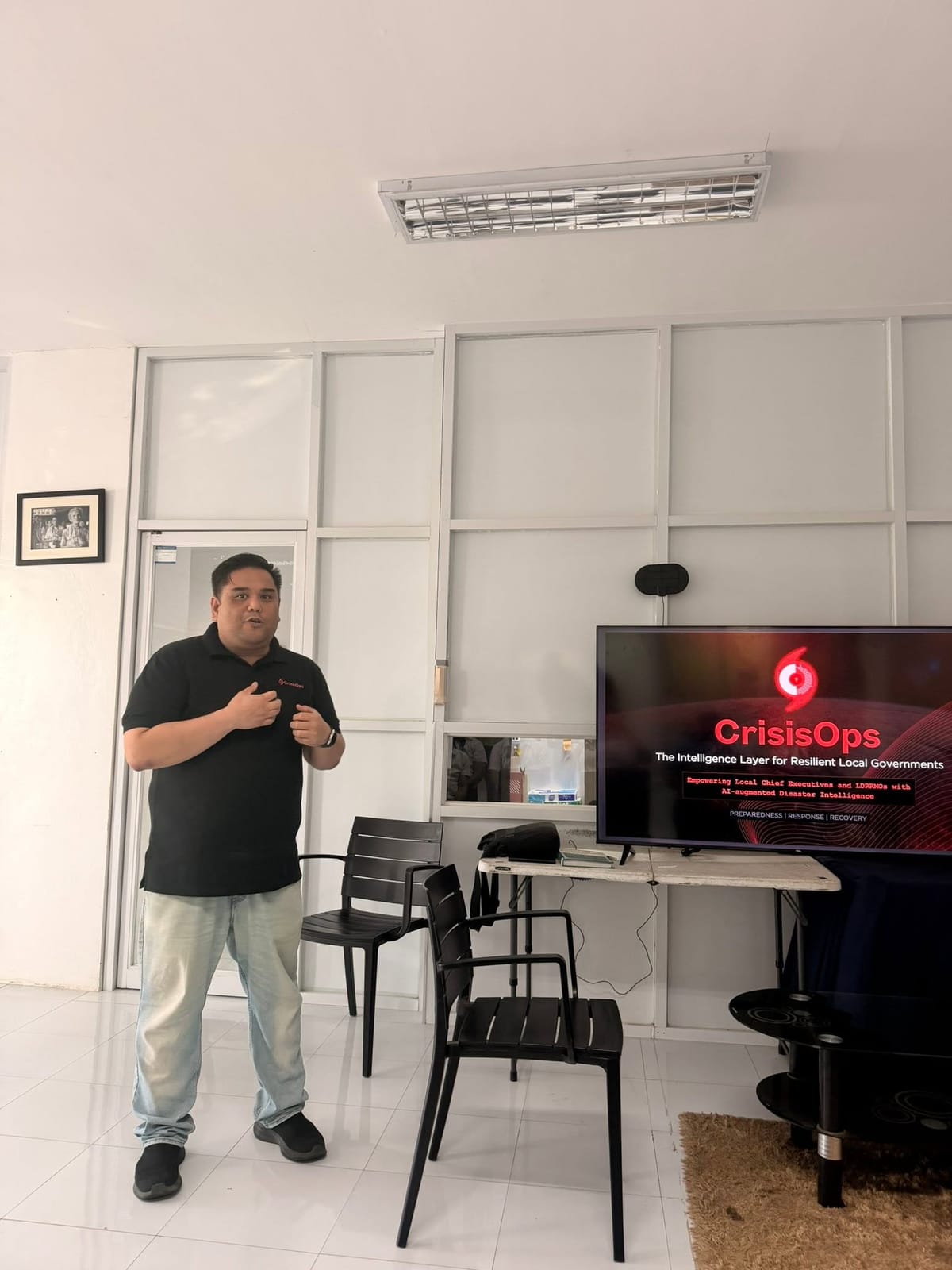
Meet CrisisOps—an AI-powered crisis intelligence platform designed to become the operating system for emergency response and resilience.
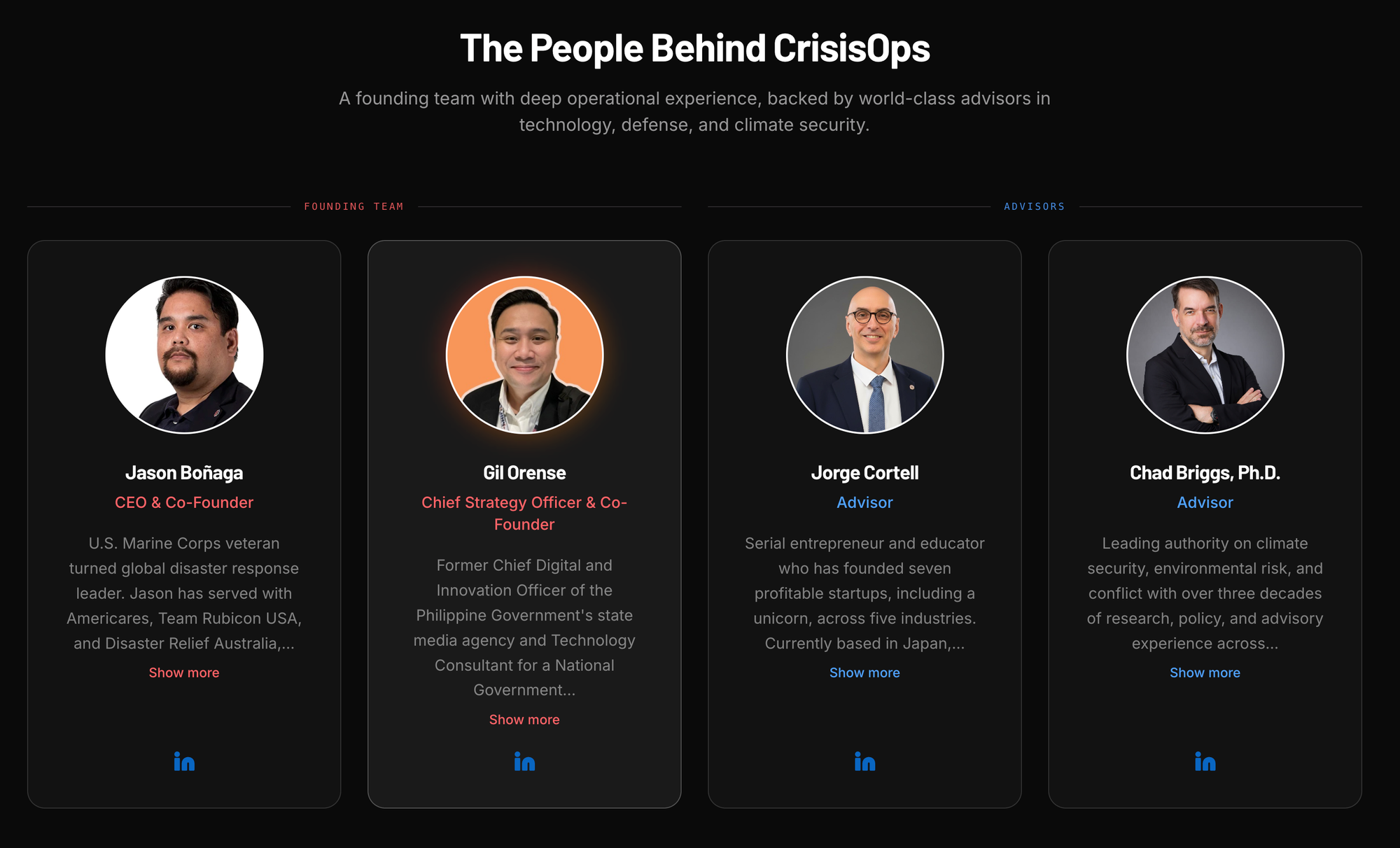
Built by the team behind ImpactVille, CrisisOps is reimagining how governments, schools, enterprises, and communities prepare for and respond to disasters, security incidents, and high-risk events.
Building Technology for the Moments That Matter Most
Most software is designed to make life more convenient.
CrisisOps was built for moments when lives may depend on decisions made within minutes.
The platform creates a single, real-time operating picture by bringing together incident reports, field operations, resource visibility, emergency check-ins, alerts, mapping, and decision support into one connected ecosystem.
Instead of chasing information across multiple platforms, decision-makers can finally see what is happening, where it is happening, and what actions need to happen next.
In a world increasingly shaped by climate change, urban disruptions, and growing security risks, that visibility is no longer a luxury. It is a necessity.
A Startup Born for Real-World Complexity
What makes CrisisOps different is its recognition that emergencies do not happen in silos.
A typhoon can simultaneously trigger flooding, infrastructure damage, transportation disruptions, communication failures, humanitarian concerns, and security issues. Traditional systems struggle because they were never designed to connect all these moving parts.
CrisisOps was.
Its ecosystem spans strategic command centers, field operations, people accountability, security intelligence, and campus safety—all working together in real time.
Every field report, every status update, and every request for assistance becomes part of one unified command picture.
The result is something every emergency operation desperately needs but rarely has: clarity.
From Startup to Resilience Infrastructure
For ImpactVille, CrisisOps represents more than another technology product.
It reflects a growing movement among Filipino startups to solve some of society's most difficult problems through innovation.

Rather than building another consumer app, the team is tackling one of the world's most urgent challenges: how to help organizations make better decisions when uncertainty is at its highest and the stakes are measured in human lives.
As countries confront stronger storms, denser cities, and increasingly complex emergencies, resilience is rapidly becoming one of the defining challenges of our generation.
The future of crisis response will belong to organizations that can transform information into intelligence and intelligence into action.
That is the future CrisisOps is building.
Because when disaster strikes, technology cannot stop the storm.
But it can help humanity respond smarter, faster, and together.