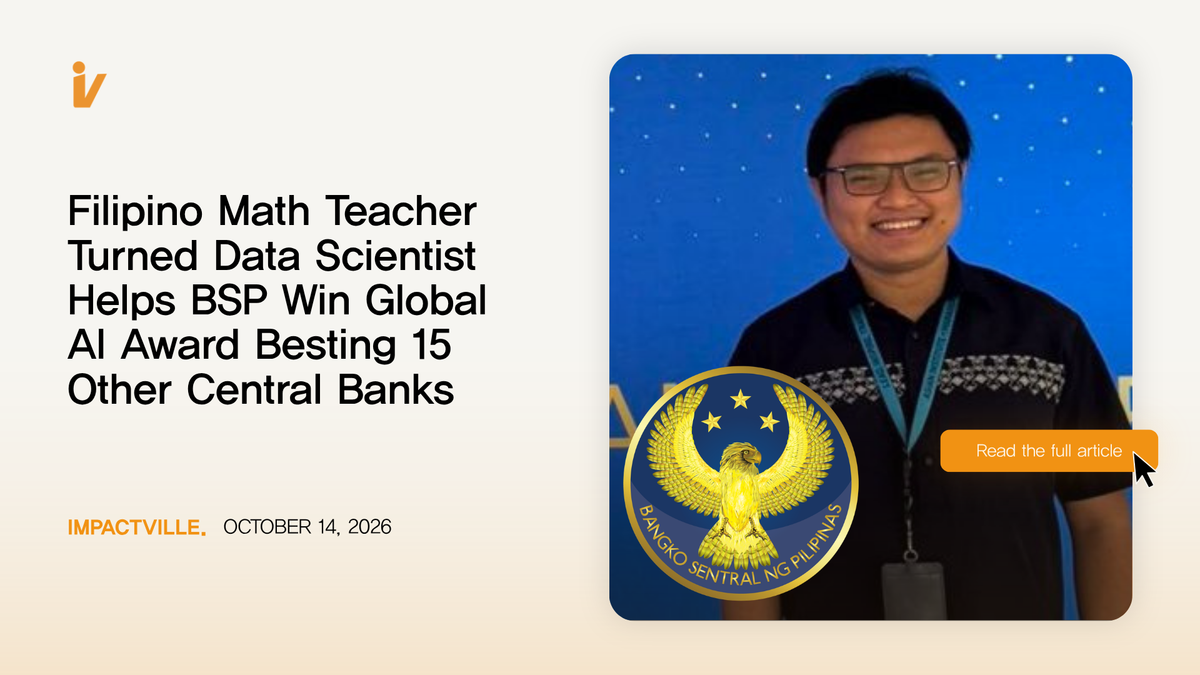
MANILA, Philippines - A former math teacher is among the Filipinos who just won the top award at a global central banking AI competition in Singapore.
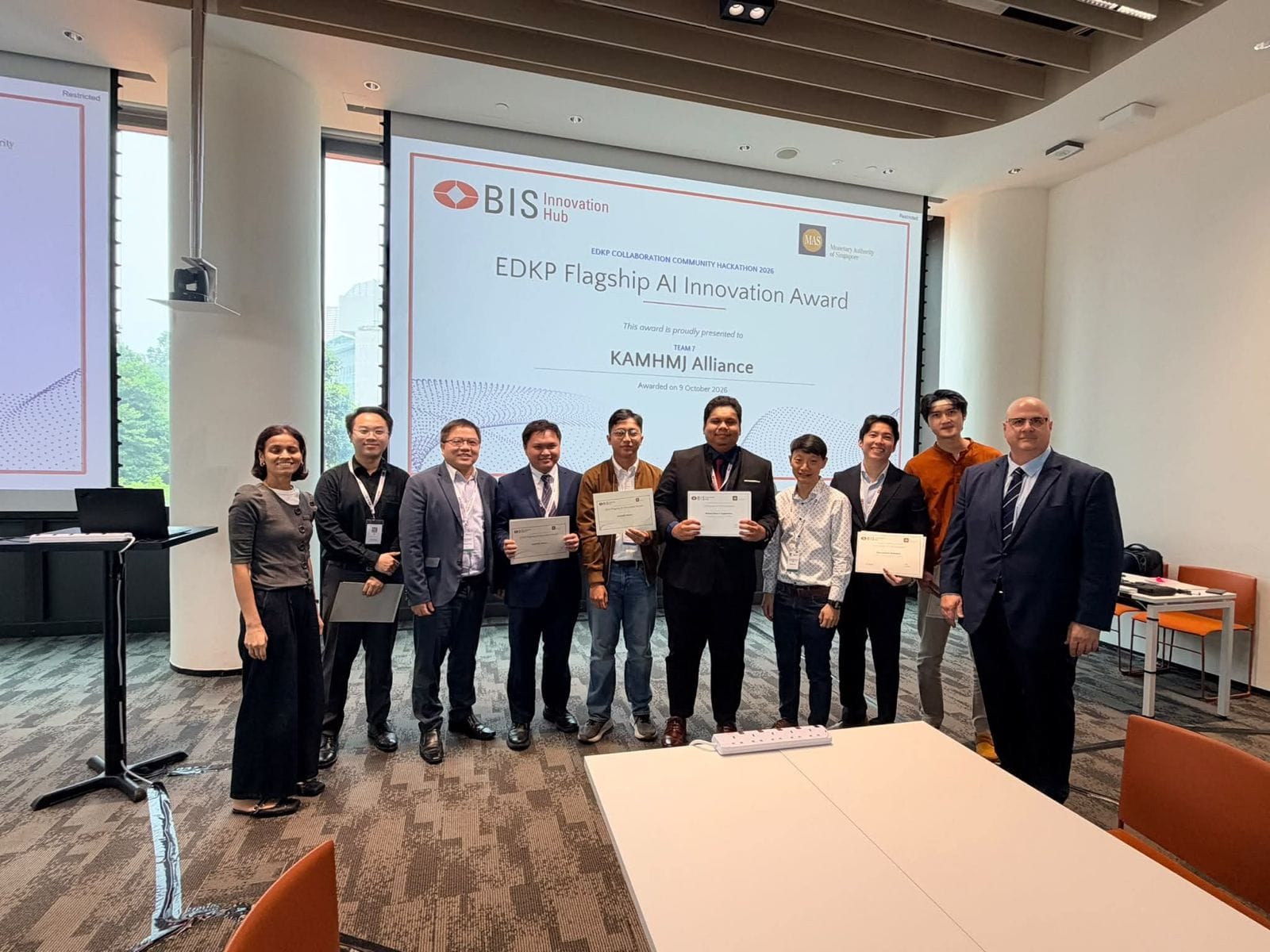
Austin James R. Angcos of the Bangko Sentral ng Pilipinas (BSP) Financial Supervision Department was part of the three-man BSP team that took the EDKP Flagship AI Innovation Award at the 2026 EDKP Collaboration Community Hackathon, beating a field of more than 70 participants from 16 central banks and financial regulatory institutions.
Their system is called BRAINS — Bank Risk AI for Intelligent Supervision. It helps bank examiners prepare for examinations by reading through financial reports, regulations and past inspection findings, and flagging what needs a human to look at it.
For Angcos, The recognition is part of a broader journey from education to data science and public service. For the BSP team, it is a shared achievement demonstrating the value of collaboration and the responsible application of technology.
What BRAINS actually does
Preparing for a bank examination means reviewing large volumes of financial reports, regulations, previous inspection findings and other documents. It is slow, and it is the part of supervision where things get missed.
BRAINS runs multiple AI agents — specialized digital assistants that work together — to:
- organize information across documents
- compare records
- identify inconsistencies
- flag missing evidence
- prepare findings for human review
The difference from a chatbot is the unit of work. Instead of asking an AI separate questions one at a time, a supervisor defines a mission — prepare for a bank examination — and the system coordinates the relevant tools and information to carry it out.
At the hackathon the team demonstrated the full workflow end to end, with evidence-linked outputs and an audit trail, so supervisors can trace exactly how any finding was generated.
The design choice the judges rewarded was reuse. Rather than leaving AI applications isolated and underused, BRAINS turns them into components any supervisory task can call on. Innovation here was not a new tool. It was making existing capabilities work together.
AI coordinates the work. Human supervisors make the decisions. Examiners remain responsible for checking the evidence, questioning findings, exercising professional judgment and approving final outputs.
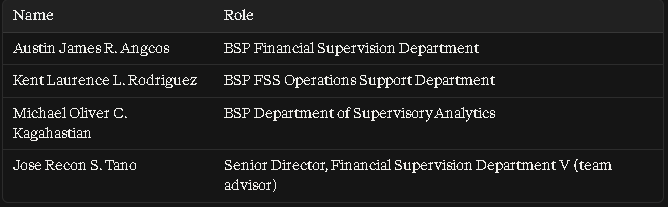
The BSP representatives worked with counterparts from Bank Indonesia and the Monetary Authority of Singapore (MAS) as part of the six-member KAMHMJ Alliance.
From the classroom to central banking
Angcos holds a BSE Mathematics degree from the Philippine Normal University (PNU), the country's national center for teacher education, and a Master of Data Science from the Asian Institute of Management (AIM).
That pairing is the point. Teacher training is about how people learn and work. Data science is about applying analytical methods to complex problems. A supervisory tool needs both: technical sophistication alone does not make a system usable.
A solution has to address what its users actually need, produce reliable results, and fit into real-world processes. BRAINS does that by organizing complex supervisory work into a coordinated workflow while keeping human professionals firmly in control.
Why this matters to ordinary Filipinos
Banks hold Filipino savings, pay salaries, move remittances and lend for homes and businesses. Financial regulators exist to make sure those banks follow the rules and manage risk responsibly. When examiners can review information faster, they can spend more attention on the risks that matter and make better-informed decisions. That is the practical case for BRAINS: not fewer people, but better-equipped ones.
About the 2026 EDKP Collaboration Community Hackathon
Jointly organized by the BIS Innovation Hub Singapore Centre and the Monetary Authority of Singapore, the 2026 EDKP Collaboration Community Hackathon brought together more than 70 participants from 16 central banks and financial regulatory institutions worldwide.
The competition featured seven use cases exploring how AI could support financial supervision, cybersecurity, economic analysis, consumer protection and financial stability.
Winning places the BSP team among the institutions showing how AI can be applied to real problems facing financial regulators — not by replacing human judgment, but by giving professionals better tools.
For Angcos, it is one more step in a journey from education to data science to public service. For the BSP, it is a shared achievement.
He began his career in the classroom, learning how people think, learn and work. Today, that lesson shapes a system that helps safeguard the banks holding the savings, salaries and remittances of Filipino families. BRAINS does not replace the examiners who supervise those banks. It gives them the time and evidence to focus on the risks that matter most. In a field racing toward automation, the BSP team has shown that the smartest use of AI is the one that keeps people firmly in charge.