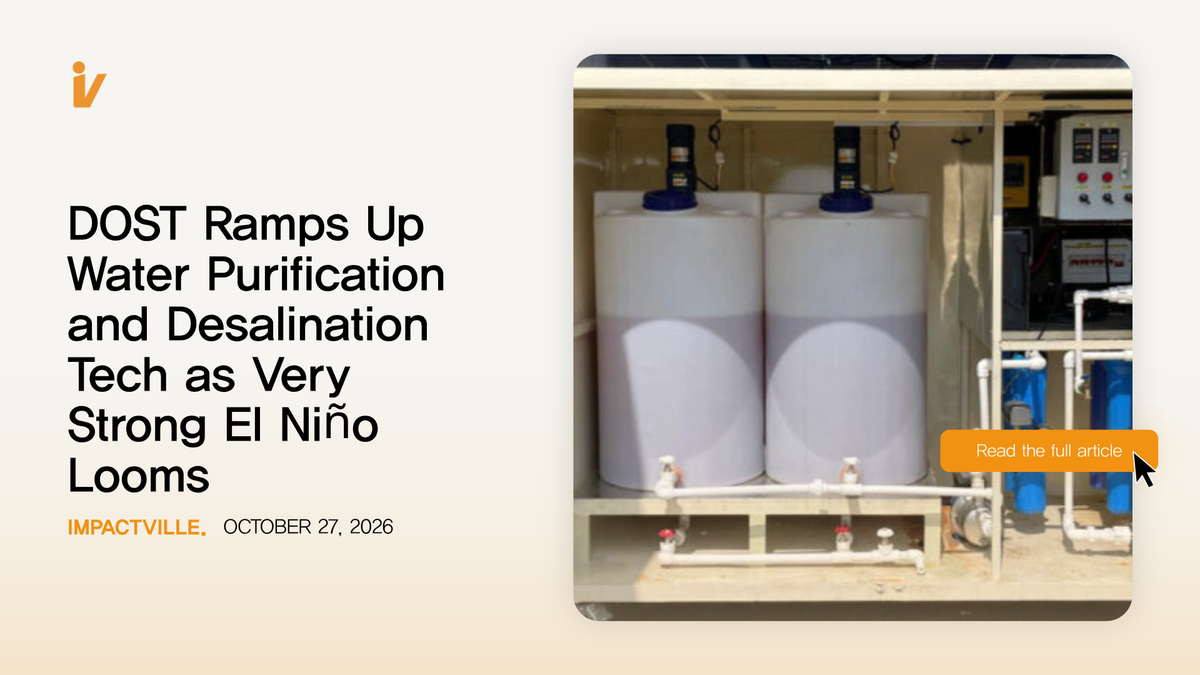
The Department of Science and Technology (DOST) is rolling out water purification, filtration and desalination technologies to soften the impact of a very strong El Niño, with a focus on remote and coastal communities where water supply is limited or easily disrupted.
DOST Secretary Renato Solidum Jr. said the agency is working on five fronts in its El Niño response: water, agriculture, energy, health and public safety, particularly fire prevention. On water, the department is pairing PAGASA's climate forecasts with locally developed treatment systems, since shrinking water sources tend to carry more impurities.
SAFEWATRS leads the rollout
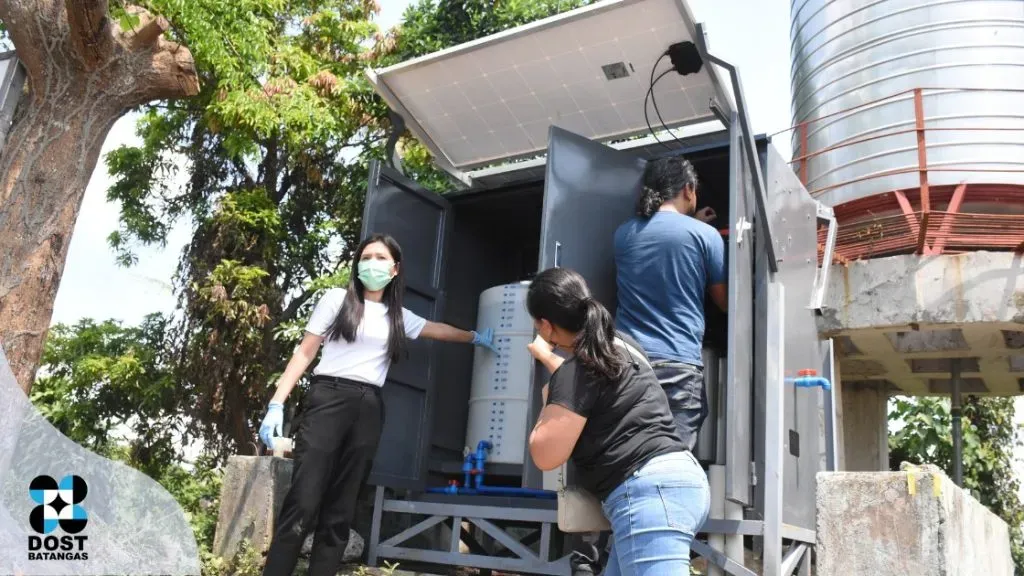
The centerpiece is the Safe Water Treatment System (SAFEWATRS), developed by the DOST-Industrial Technology Development Institute (DOST-ITDI). It is a compact, solar-powered mobile unit that can produce up to 2,000 liters of drinking water in nine hours, which makes it suited to emergencies and areas cut off from regular supply.
Solidum said 22 units have already been deployed to communities nationwide. In Quezon province, the island municipality of Jomalig, which has begun to feel water shortages linked to El Niño, received a solar-powered purification system during Regional Science and Technology Week (RSTW) 2026. "We hope to roll this out during this El Niño event," Solidum said.
Desalination for coastal and island towns
DOST-ITDI has also developed a desalination technology that converts seawater and brackish water into potable water. Its compact units produce 40 liters per hour, and its modular reverse osmosis design lets communities add capacity as demand grows. DOST and partner universities are building more machines, with Solidum acknowledging that more are needed.
In Eastern Visayas, regional director John Glen Ocaña said SAFEWATRS and desalination projects will cover five communities in the first year of rollout in 2027. The desalination units are planned for Almagro in Samar, Hinunangan in Southern Leyte and Naval in Biliran.
Regional efforts and a funding ask
In Central Visayas, DOST-7 is promoting rainwater harvesting and wastewater reuse. On October 14, it launched a containerized membrane bioreactor demonstration plant in Lapu-Lapu City that can treat up to 50,000 liters of wastewater a day. DOST-7 is also deploying a SAFEWATRS unit in Medellin, northern Cebu.
To scale up, DOST has proposed an additional PHP400 million to PHP500 million for production of more filtration and desalination systems. Solidum noted that local governments able to fund their own systems can be linked with technology fabricators, freeing DOST resources for communities with the greatest need.
What to watch
Solidum has said El Niño conditions are expected to persist into the first quarter of 2027, covering the dry summer months. Whether the proposed budget is approved, and how quickly additional desalination units move from the lab to the field, will determine how far the technology reaches before the driest months arrive.
Sources: PIA: Water purification, filtration, desalination systems seen to ease El Niño effects, PIA Aklan: DOST highlights cost-effective technology, BusinessMirror, Mindanao Times, Manila Magazine, Tech Pilipinas, Cebu Daily News, The Chronicle