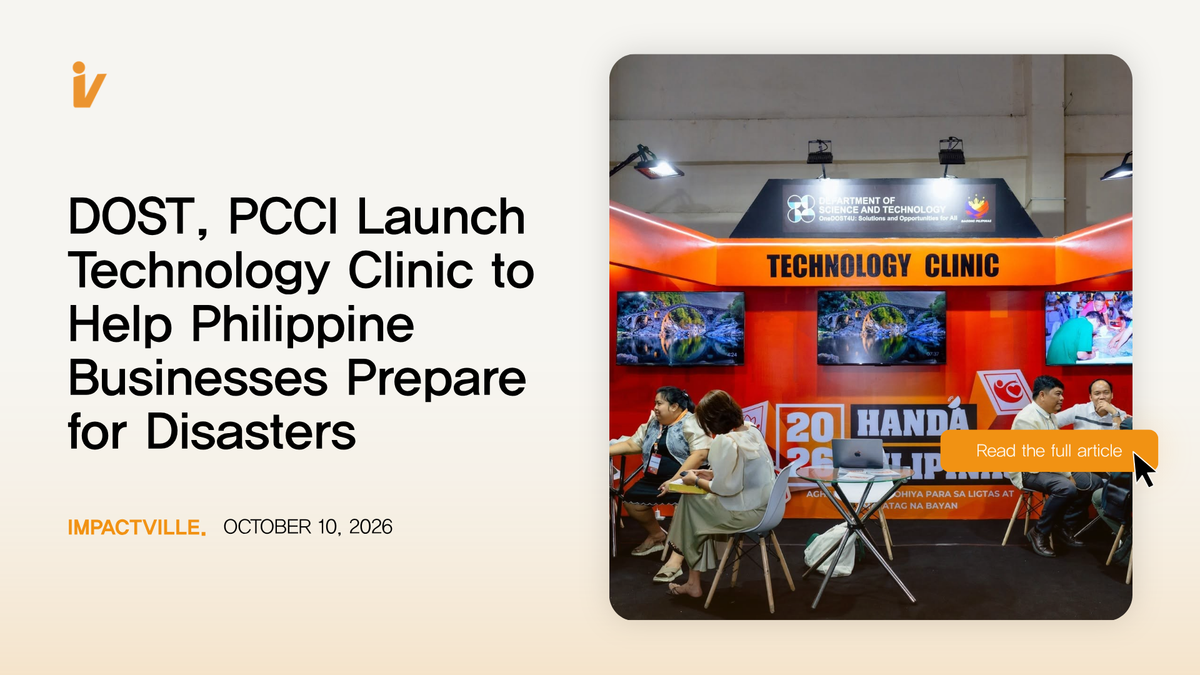
The initiative in Eastern Visayas uses technology needs assessments to connect businesses and local governments with science-based solutions for disaster preparedness and resilience.
Disasters can disrupt more than homes and infrastructure. For businesses, they can interrupt daily operations, threaten employees' safety, damage assets, and affect the livelihoods of communities that depend on local enterprises.
Recognizing these risks, the Department of Science and Technology (DOST) Eastern Visayas has partnered with the Philippine Chamber of Commerce and Industry (PCCI) Tacloban-Leyte Inc. to help businesses and local government units (LGUs) strengthen their disaster preparedness through science and technology.
The partnership was highlighted during the 2026 HANDA Pilipinas: Agham at Teknolohiya Para sa Ligtas at Matatag na Bayan, held from October 7 to 9 at the Leyte Convention Center in Palo, Leyte.
The initiative marks the first time DOST Eastern Visayas has collaborated with PCCI Tacloban-Leyte to directly engage the business community in preparing for the impacts of disasters.
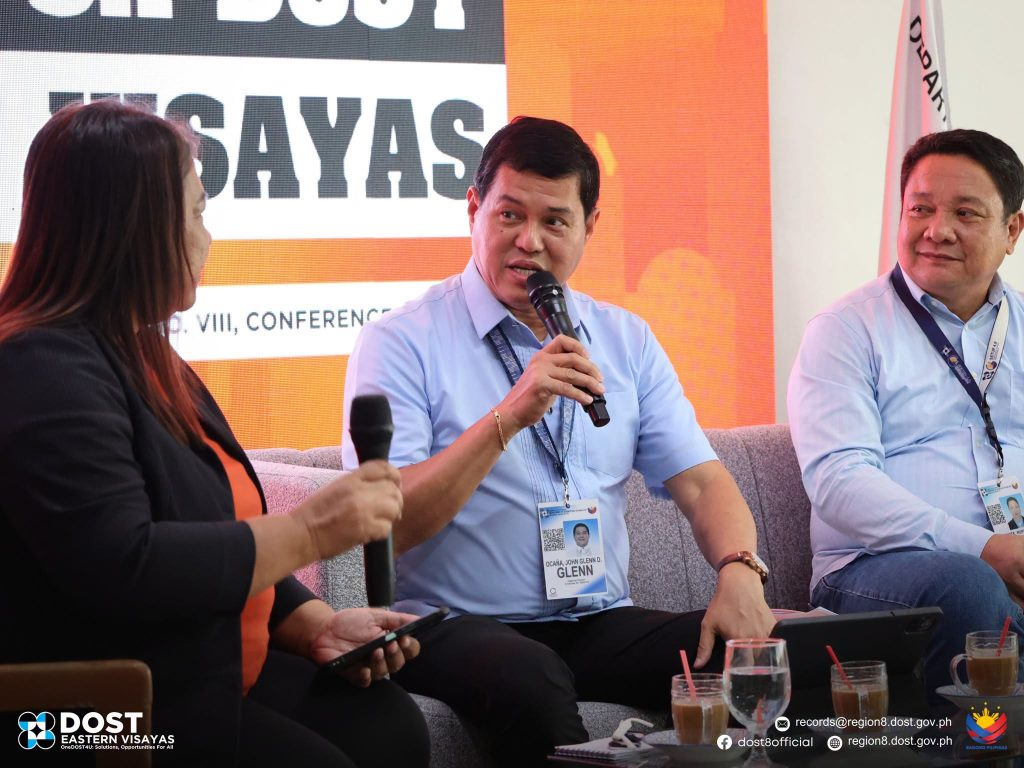
According to DOST Eastern Visayas Regional Director John Glenn D. Ocaña, businesses are among the sectors highly vulnerable to disasters. He emphasized the importance of understanding what to do before, during, and after a disaster to protect people, operations, and livelihoods.
A Technology Clinic for Local Needs
One of the key features introduced during HANDA Pilipinas 2026 is the Technology Clinic, a service designed to help businesses and LGUs identify their specific needs in climate and disaster resilience.
Rather than simply presenting available technologies, the clinic uses a technology needs assessment tool to determine what kind of support an organization requires.
The process works similarly to a medical consultation: businesses and local governments identify their preparedness gaps, assess their needs, and receive guidance on potential solutions.
Following the assessment, businesses can be referred to the appropriate government agency for relevant assistance and interventions. The support is not limited to DOST, allowing organizations to be connected with agencies best suited to address their identified needs.
DOST Project Development Officer IV Rachelle Anne L. Miranda explained that the approach is intended to help communities and businesses determine which science and technology solutions would be most useful for their specific circumstances.
Connecting Science With Disaster Preparedness
HANDA Pilipinas also showcased science-based disaster risk reduction and management technologies, early warning systems, and digital data platforms.
Exhibits included products and services from DOST's Philippine Atmospheric, Geophysical and Astronomical Services Administration (PAGASA) and Philippine Institute of Volcanology and Seismology (PHIVOLCS).
These agencies provide information and tools that support weather monitoring, hazard warnings, and preparedness for potential disasters, including weather-related threats and geological hazards.
For businesses and LGUs, access to reliable information can help inform decisions about emergency planning, operational continuity, and community safety.
The initiative also reflects the importance of preparing for climate-related risks, including the anticipated El Niño phenomenon, which can affect water availability, agriculture, and local economic activity.
By connecting stakeholders with relevant scientific information and technologies, DOST aims to make disaster preparedness more practical and responsive to local needs.
Building More Resilient Businesses and Communities
For PCCI Tacloban-Leyte Inc. President Henry Y. Goysico, the partnership represents a commitment to bringing the experiences and needs of businesses into wider discussions about preparedness, innovation, and resilience.
Business resilience involves more than recovering after a disruption. It also means protecting employees, maintaining essential operations, safeguarding livelihoods, and preparing for future risks.
This is particularly important for micro, small, and medium enterprises (MSMEs), which play a significant role in local economies and may face difficulties when disasters interrupt their operations.
During the second day of HANDA Pilipinas on October 8, several LGUs had already visited and consulted the Technology Clinic, including Ormoc City, Hindang and Jaro in Leyte, and Mapanas and Pambujan in Northern Samar.
These consultations demonstrate how the clinic is being used to identify local preparedness needs. However, the longer-term impact will depend on how identified needs translate into appropriate assistance, technology adoption, and sustained disaster readiness.
Moving Beyond Technology Exhibitions
DOST Secretary Renato U. Solidum Jr. said HANDA Pilipinas is moving toward a more structured and sustained capacity-building approach.
Under this direction, the initiative seeks to understand what communities actually need instead of focusing only on showcasing available technologies.
The shift places greater emphasis on identifying specific problems, matching organizations with relevant solutions, and strengthening the capacity of businesses and local governments to prepare for disasters.
For the Philippine innovation ecosystem, this approach highlights an important principle: technology creates greater value when it responds to actual needs and can be applied in real-world situations.
The Technology Clinic in Eastern Visayas offers an example of how government agencies and business organizations can work together to connect scientific knowledge with practical challenges.
As climate and disaster risks continue to affect communities and economic activity, strengthening preparedness requires more than access to technology. It requires making sure the right solutions reach the people and organizations that need them.