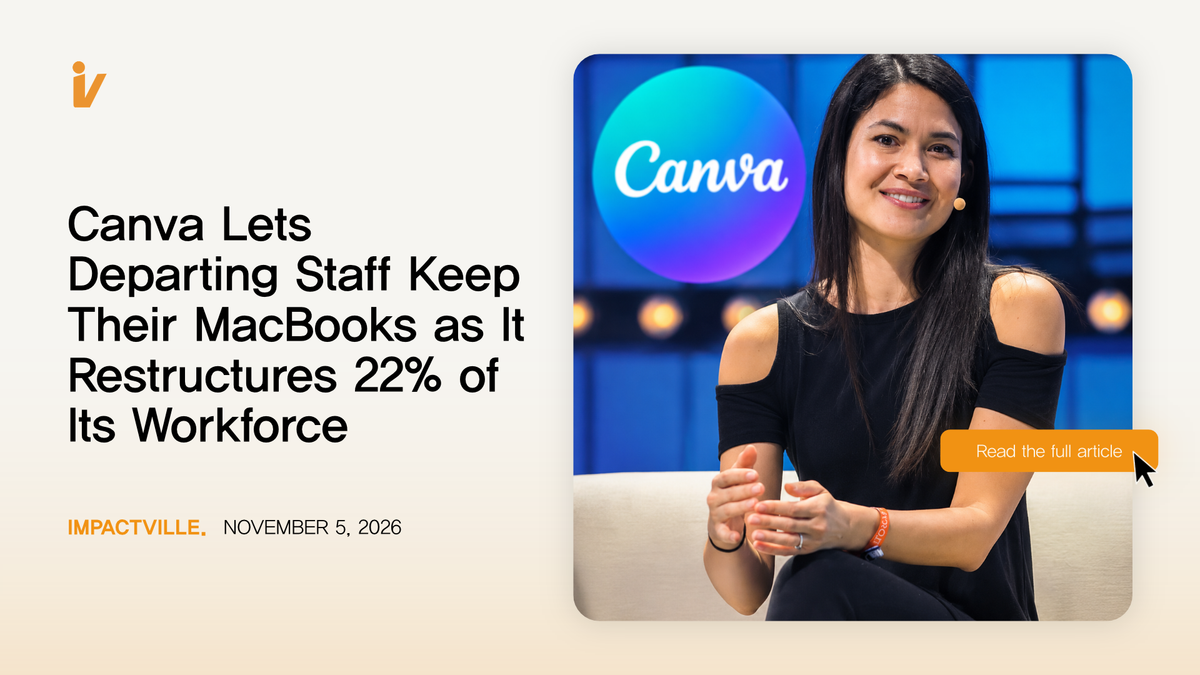
Canva, the Australian design platform that built one of its biggest teams in Manila, is restructuring for the first time in its 13-year history. And the support package for departing employees, which includes keeping their company-issued MacBooks, is getting as much attention as the cuts themselves.
On November 4, co-founder and CEO Melanie Perkins told staff in a note, later published by Canva, that the changes will affect 1,271 people, about 22% of the company. Perkins called it "the hardest moment in our thirteen-year history." Not all 1,271 will lose their jobs. Some will change roles and others will be asked to relocate, and the note does not say how many are leaving. Canva has staff in 37 countries, and the timing of consultations depends on local rules.
What departing employees get
Per the reports on Perkins' note, everyone leaving receives:
- At least six months' salary, including statutory entitlements, wherever they are based.
- Their Canva MacBook.
- No vesting cliff: the one-year cliff is removed for people who joined within the past year.
- 12 months of healthcare where Canva already provides it, plus 12 months of its employee assistance program.
- Career support: coaching, a talent directory and a year of LinkedIn Premium.
- A US$10,000 grant through the Canva Collective Fund for anyone who wants to start a venture, with no ownership or equity taken by Canva. Applications close December 14.
Perkins also called off non-critical meetings for the rest of the week and told staff they could take a day off without logging it as leave. An all-hands meeting is set for November 10.
Why Canva is doing it
Perkins said growth slowed this year for the first time in a decade, and that new technology is changing how people create and what they expect from products. She wrote that small tweaks will not be enough and that Canva must "refound" itself around small, self-directing teams, according to The Next Web's report.
The structural changes are specific. Product, Growth and Platform teams merge into one Product Org. Narrow specialist roles are folded into broader ones, and management layers are cut. Sydney becomes the main base for more product teams, and from January most hybrid staff are expected in the office two to three days a week.
The Australian Financial Review reported that Canva lowered its 2026 revenue growth forecast from 30% to 20% in August, and that Canva and two backers marked down its valuation that month. Canva reported US$3.5 billion in revenue and 260 million monthly users last year. The 22% figure implies a workforce of roughly 5,800.
How this compares with other 2026 layoffs
Keeping the laptop is becoming a recognizable part of the tech exit package this year, though Canva's six-month floor is on the generous end.
- Block (February): cut more than 4,000 jobs, taking headcount from over 10,000 to just under 6,000. Affected staff got 20 weeks of pay plus a week per year of tenure, equity vesting through May, six months of health coverage, US$5,000 and their corporate devices. CEO Jack Dorsey tied the move to smaller teams using AI tools, and said the business was strong.
- Squarespace (November 2): cutting about 19% of staff, around 300 people, mostly in product and engineering. Departing staff get at least 16 weeks of base pay plus tenure-based weeks, benefits through May 2027, and their laptops.
- Meta and Oracle: Meta's reported package for its up-to-8,000-person cut was 16 weeks plus a service-based bonus. Oracle's U.S. terms were four weeks plus one week per year of service, capped at 26 weeks.
Industry trackers show how crowded the exit line is. TrueUp counted 196,349 people affected by tech layoffs as of October 23, and most large cuts this year have cited AI or flatter structures. Analysts quoted in industry coverage say better severance also helps companies manage legal risk and protect their reputation with a wary talent pool.
The Philippine angle
Canva opened its first office outside Australia in Manila in 2014, and the Philippines remains its biggest team after Australia, per Vogue Philippines. Reports put the Manila headcount at over 1,000, and Canva's country head has said most Filipino employees work in the Customer Happiness team that supports users around the world. Whether and how many Philippine-based employees are affected has not been confirmed. Perkins' note says the changes will vary by country under local requirements.
For Filipino workers, the immediate question is how the "at least six months, wherever they are based" commitment applies locally. For the wider startup scene, Canva's cut is a reminder that even a decacorn with a large Manila presence is reorganizing around fewer, smaller teams.
Why it matters for the startup ecosystem
Two things stand out for founders. First, the package: a company that has long been known for avoiding layoffs is setting its terms publicly and up front, and is giving departing staff a seed grant to start something of their own. Second, the cause: a slowdown at one of the world's most successful startups, with technology shifts and cost of AI cited as pressures, is a signal for any founder planning headcount around the next two years.