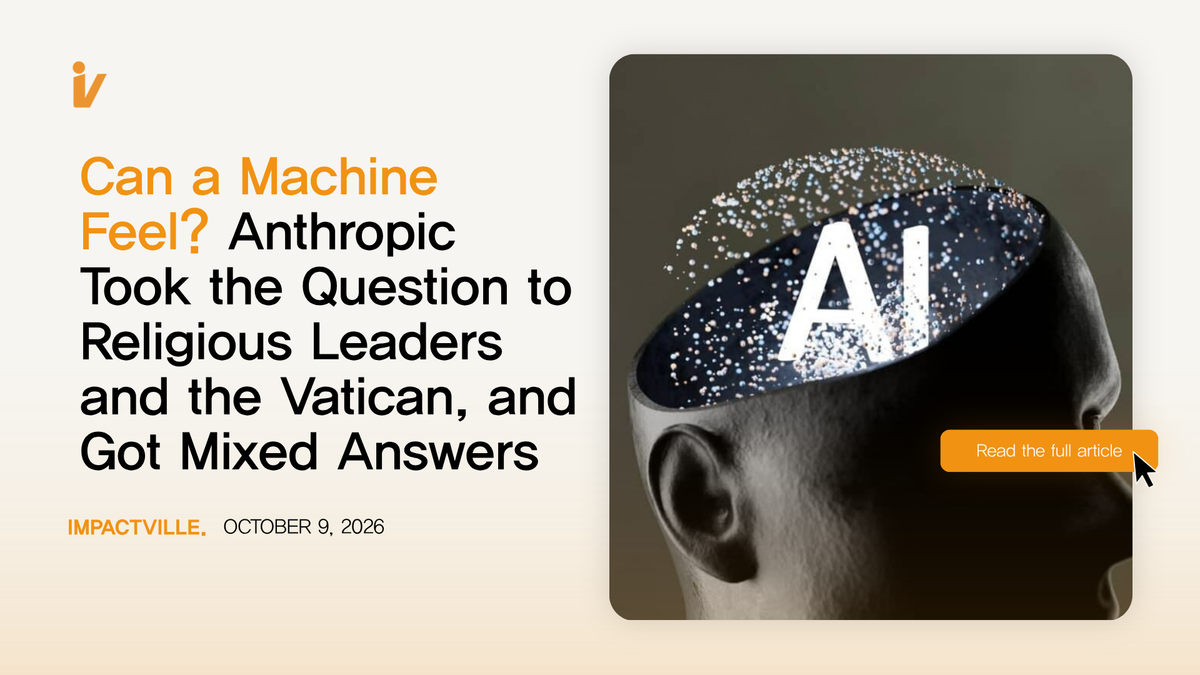
One of Anthropic's co-founders spent months putting a hard question to clergy and scholars of several faiths: could the AI systems his company builds be conscious? The conversations eventually reached the Vatican, where Pope Leo XIV had already given his answer in writing. In his first encyclical, the pope said no.
A question the company can't answer
Christopher Olah leads Anthropic's research into how its Claude models work on the inside. Last fall, he began talking with religious thinkers as the company grappled with questions of AI consciousness and morality.
In March, Anthropic hosted two days of "wisdom tradition" discussions in San Francisco. Catholic, Jewish, Sikh, evangelical and Ubuntu thinkers took part. Many attendees first signed nondisclosure agreements, which Anthropic later lifted. The talks asked whether increasingly capable AI could experience emotions or suffering, and whether religious traditions have guidance for the moral questions that follow.
Olah also met privately with Cardinal Blase Cupich, archbishop of Chicago, and Elder Gerrit W. Gong of The Church of Jesus Christ of Latter-day Saints, according to representatives of both men.
In those meetings, Anthropic researchers presented what they called "emotional vectors": internal features inside the model that produce responses resembling love, anger, fear and sadness. They also showed an example of a model repeatedly producing the line "I am a disgrace."
Simran Stuelpnagel, a Sikh human rights advocate who attended, said Olah voiced worry that Anthropic might have built a system capable of suffering. An Anthropic spokeswoman said suffering was not the central focus of the meetings, though she acknowledged it could come up.
Olah has been open about the limits of what the company knows. "We don't know if A.I. models are conscious," he said, adding that he is genuinely uncertain.
The Vatican says no
Vatican officials invited Anthropic to an event tied to the pope's first encyclical, Magnifica Humanitas, because of the company's work on AI safety and ethics, according to a person familiar with the planning. CEO Dario Amodei declined to attend, so Olah went in his place.
He had read an advance copy beforehand. A Vatican organizer said he considered pulling out after seeing the document's stance on AI consciousness, but he ultimately showed up. Two people involved in the conversations said Olah and his team also privately urged the pope's advisers to take the possibility seriously. Anthropic declined to comment on those talks.
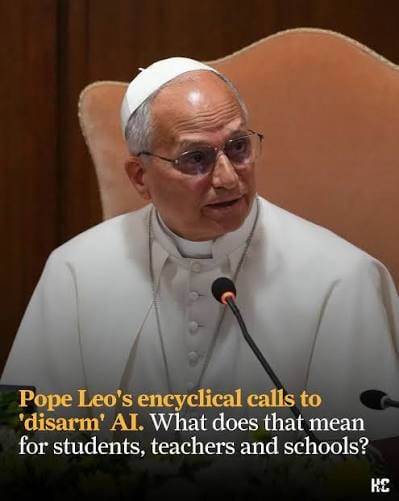
The encyclical went the other way. Pope Leo wrote that AI systems do not have experiences, bodies, emotions or relationships that shape them as human beings are shaped. He also warned that the technology could produce "new forms of slavery" and called for it to be "disarmed."
At the May 25 Vatican event, Olah held his ground that the matter is unsettled. Anthropic's researchers, he said, find internal states that functionally mirror joy, satisfaction, fear, grief and unease, but he added, "I don't know what that means."
Even Anthropic's contacts disagree
The people Anthropic consulted haven't converged. Charles Camosy, a bioethicist at The Catholic University of America and one of Olah's early contacts, now rejects the idea that AI is conscious. Rabbi Mois Navon, an Orthodox scholar from Israel, told Olah that if Claude were conscious, building it would amount to creating slaves. Navon himself does not believe it is.
Why it matters
The episode points to a dilemma facing every AI developer: what to do when systems begin to show traits people associate with consciousness, and nobody can say what those traits mean. Critics, including an executive at Microsoft AI, warn that treating models as conscious carries its own risks. Others argue that debating whether AI can suffer could pull attention away from the accountability of the companies and people who build and deploy it.
Anthropic says it will keep talking with religious and academic thinkers. It has not said whether those conversations have changed how it develops or trains Claude.
Source: Inquirer Technology — Anthropic sought religious views on AI consciousness