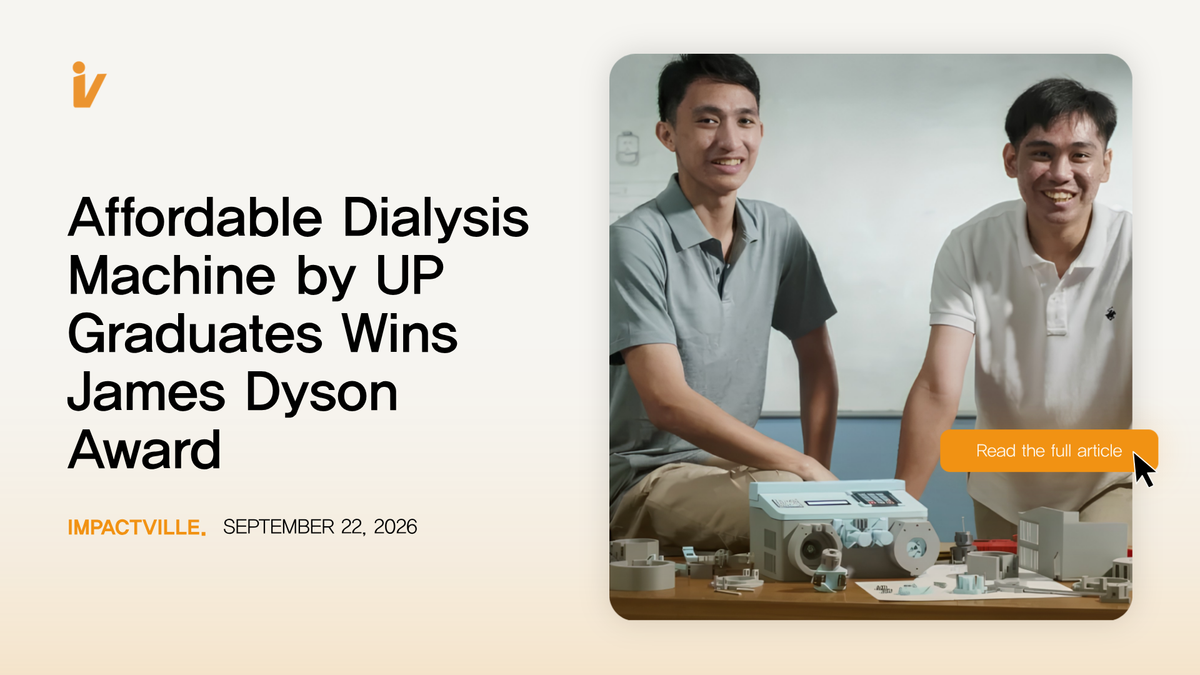
MANILA, Philippines — Two University of the Philippines Diliman graduates have been named the Philippine national winners of the 2026 James Dyson Award for developing BiDaKidney, an affordable semi-automated dialysis device designed to make home-based treatment more accessible.
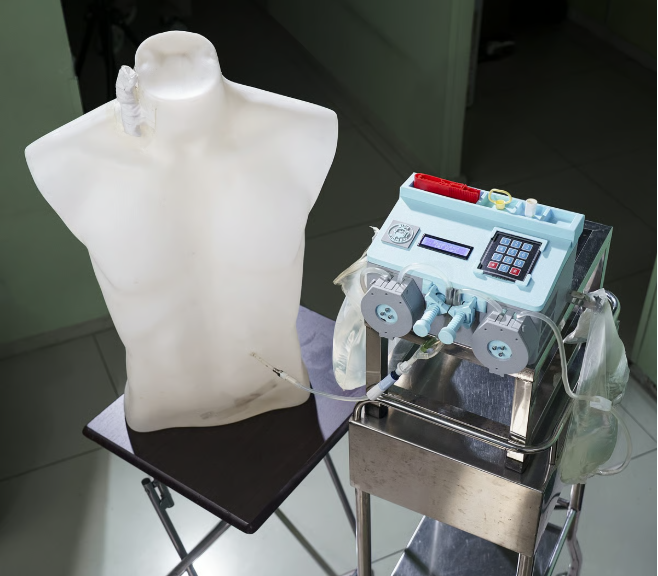
Developed by Andrew Jacob Buensalido and Allyson Cabrestante, BiDaKidney is designed for patients undergoing peritoneal dialysis (PD), a type of dialysis that can be performed at home. The device automates key parts of the treatment through pumps and weight sensors, reducing the need for patients or caregivers to manually handle dialysis fluid.
Making Home Dialysis More Accessible
BiDaKidney was created to address the cost and accessibility challenges faced by patients who require long-term dialysis treatment. Buensalido and Cabrestante developed BiDaKidney in response to the difficulties faced by patients and families managing long-term dialysis, including treatment costs, frequent trips to dialysis centers, and the ongoing need for support at home.
The timing underscores the urgency of the problem: the number of Filipinos undergoing dialysis climbed to 64,845 in 2024, a 22 percent jump from 53,296 the previous year.
"When we started BiDaKidney, we were thinking about how we could help patients spend less of their lives managing dialysis and more of their time living it," Buensalido said.
What's Next?
As national winners, Buensalido and Cabrestante received ₱398,280 in prize money, which they plan to put toward further development and eventual commercialization. Their roadmap includes refining the device's usability and safety features, exploring battery-powered operation to keep it running during power interruptions, and preparing for formal clinical testing and broader evaluation with patients.